
When a flood strikes your home, one of the most disheartening sights can be the soaked rugs lying on your floors. Not only are they a valuable part of your home decor, but they also hold sentimental value for many families. Understanding how to dry a rug after a flood effectively is crucial to preventing mold growth and retaining the rug’s quality. That's where a restoration company in Columbus and its nearby communities steps in to guide you through the drying and restoration process, offering professional assistance if DIY measures prove insufficient.
Flooding can occur for a variety of reasons, ranging from natural disasters to plumbing failures, and the aftermath is often chaotic. Armed with the right knowledge and tools, homeowners can tackle the daunting task of drying flooded rugs effectively. This blog will offer practical and actionable tips to help you handle this challenge. From quick assessments to advanced drying techniques, these steps are designed to guide you in your time of need.
Let’s dive into the six handy tips that will make the process of drying your rug manageable, ensuring your home quickly returns to its former comfort and elegance.
1. Quick Assessment and Action
The very first step in saving your rug is a swift evaluation of the flood's impact. Water can cause different levels of damage depending on its source, such as clean rainwater, gray water from appliances, or black water from sewage. Understanding the water type helps in deciding the appropriate cleaning methods and whether professional assistance might be necessary.
- Act Fast : The sooner you start the drying process, the higher the chances of saving your rug. Quickly remove the rug from the flooded area to prevent prolonged exposure to water.
- Check for Dyes : Wet rugs can bleed colors onto floors, so place towels underneath to prevent further damage.
Recognizing when immediate professional help is essential can save the rug and reduce further losses. A reputable restoration company in Columbus, OH, experienced in water damage restoration, can provide valuable expertise and resources.
2. Remove Excess Water
After assessing the situation, your next move should be to drain as much water as possible from the rug. Doing so greatly expedites the drying process and reduces bacterial growth potential.
- Blot and Press : Use clean towels to absorb water from the rug. Avoid rubbing, as it might damage fibers.
- Use a Wet/Dry Vacuum : An efficient tool that helps extract water quickly from the rug fibers.
Remember, minimizing the presence of water will stave off the growth of mildew and mold, which can happen rapidly in moist environments.
3. Boost Air Circulation
Creating a well-ventilated environment aids tremendously in lessening the drying time for rugs. Airflow is the simplest yet one of the most effective tricks in your arsenal.
- Open Windows : Let in fresh air to disperse moisture.
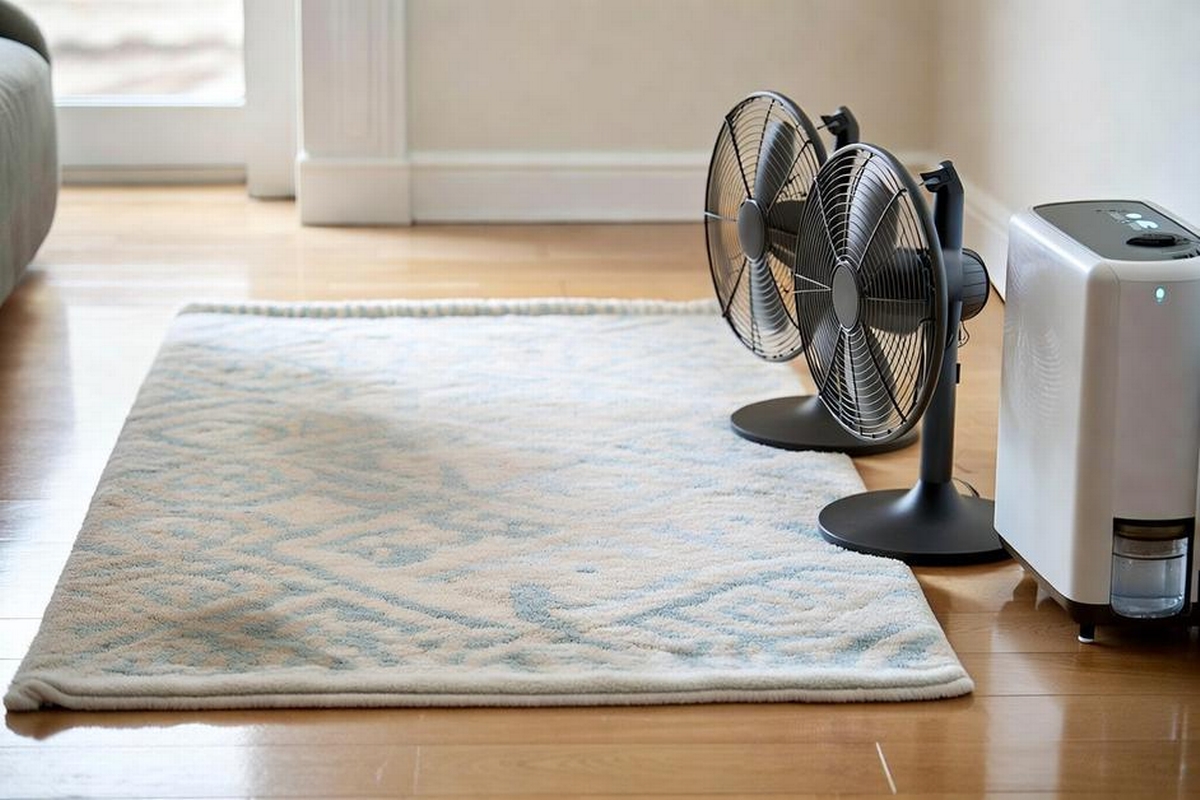
- Deploy Fans and Dehumidifiers : Position fans strategically around the room to circulate air and use a dehumidifier to pull moisture from the air.
Enhancing airflow not only aids in drying but also helps in reducing the musty odors that often accompany damp rugs.
4. Employ Heat With Caution
While heat can accelerate the rug-drying process, care is needed to avoid causing damage. Excessive heat could shrink or distort the rug fibers.
- Moderate Heat : Consider using space heaters to elevate the ambient temperature slightly, but do not place them directly on the rug.
- Sunshine : When feasible, lay your rug in natural sunlight. This not only aids drying but also naturally deodorizes.
Keep a watchful eye on the rug during this process to ensure that heat is enhancing, not harming, the restoration efforts.
5. Seek Professional Cleaning
Even after following these tips, residues and stubborn damp spots may remain, continuing to pose a threat of mold and mildew. Professional cleaning provides a more thorough approach by penetrating deeper into the rug fibers.
- Professional Steam Cleaning : The steam cleaning method sanitizes and removes deep-seated residue more effectively than home cleaning solutions.
The need for deep cleaning can be markedly reduced by engaging services that specialize in mold removal in Columbus, thereby safeguarding the air quality in your home.
6. Inspect and Perform Final Touch-Ups
Before returning the rug to its original location, ensure it is completely dry and free of mold. This is your chance to apply protective treatment to prevent future water damage.
- Inspect for Damage : Look for any signs of deterioration, such as frayed edges or warping.
- Apply Carpet Protector : A protective spray can prevent future stains and make cleaning easier.
By meticulously inspecting your rug, you can address potential issues early, preventing more significant problems down the line.
Ensuring Long-Term Protection and Peace of Mind
The aftermath of a flood can be overwhelming, but by following these detailed steps on how to dry a rug after a flood, you can restore your home to its cozy state. Remember, for extensive damage, investing in expert services is invaluable.
Residents can benefit from comprehensive water damage restoration in Gahanna and its nearby areas tailored to meet their specific needs. Thompson Restoration Associates stands ready to assess damage, provide professional cleaning, and restore your home effectively.
For those in immediate need, consider reaching out for services that extend beyond just drying, such as deodorization and providing personalized restoration strategies for your residence. Our expertise ensures a swift, thorough revival of your living space, comforting you back into a dry, safe home. Contact us today to learn how we can help restore both your rugs and your peace of mind.